
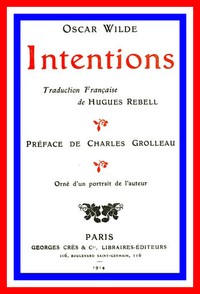
Intentions by Oscar Wilde
Don't go into Intentions looking for a traditional story. Think of it instead as a series of brilliant conversations and arguments. Wilde presents his ideas through essays and imagined dialogues, where characters debate the big questions of art, criticism, and beauty.
The Story
There's no plot in the usual sense. In one piece, 'The Decay of Lying,' a character argues passionately that lying—the telling of beautiful, untrue things—is the proper aim of art. In 'The Critic as Artist,' Wilde makes the case that criticism is itself a creative art, even higher than creation. Throughout, he challenges the Victorian idea that art must teach a moral lesson. For Wilde, art's only purpose is to be beautiful, and it's society's job to catch up.
Why You Should Read It
Reading this feels like unlocking a cheat code for seeing the world differently. Wilde's wit isn't just for show; it's a tool to dismantle boring, conventional thinking. His famous line 'Life imitates Art far more than Art imitates Life' still feels revolutionary. It’s a book that gives you permission to value beauty, style, and imagination without apology. You'll find yourself nodding along, then laughing at the sheer audacity of his perfectly crafted sentences.
Final Verdict
Perfect for anyone who loves a good argument, appreciates razor-sharp wit, or has ever felt that mainstream culture takes itself too seriously. It's not a light beach read, but a sparkling, intellectual cocktail. If you enjoy questioning the rules and believe style is substance, you'll find a kindred spirit in these pages. A century later, Wilde still feels like the most interesting person in the room.
This historical work is free of copyright protections. It is available for public use and education.


Jackson Jones
1 year agoI was skeptical at first, but it provides a comprehensive overview perfect for everyone. A valuable addition to my collection.