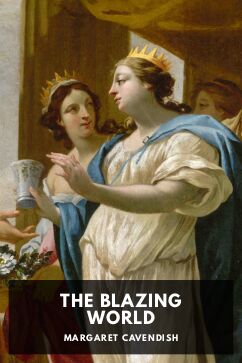
The Blazing World - Margaret Cavendish
Let's set the scene: London is about to burn in the Great Fire, and here comes Margaret Cavendish, a Duchess, publishing a science-fiction novel under her own name. The audacity! The story follows a young woman who is kidnapped by a lovesick merchant and taken on a ship toward the North Pole. After a strange celestial event, she's the sole survivor, arriving in a dazzling new world connected to ours by a portal at the pole.
The Story
This new world, the Blazing World, is populated by fantastical hybrid creatures: bear-men who are great astronomers, bird-men who are brilliant politicians, worm-men who are natural philosophers. They immediately recognize the heroine's virtue and intellect and crown her their absolute Empress. What follows is less a linear plot and more a series of conversations and projects. The Empress, with her otherworldly advisors, sets out to build a perfect society. They debate religion, science, and government. She even summons the soul of the Duchess of Newcastle (Cavendish herself!) as a spiritual guide. It culminates in the Empress raising an army from her world to return to ours and become a world-conquering peacemaker.
Why You Should Read It
Reading this feels like uncovering a secret. The joy isn't in tight plotting, but in watching Cavendish's boundless mind at play. She uses this fantastical setting to argue for experimental science, question absolute monarchy, and, most powerfully, imagine a space where a woman's intellect is not just accepted, but revered as the highest authority. The Empress isn't a love interest; she's a sovereign thinker. In an age that told women to be silent, Cavendish built a whole world to give her ideas a megaphone. It’s quirky, uneven, and gloriously ambitious.
Final Verdict
This book is perfect for readers who love literary history and want to see the roots of science fiction. If you enjoy early, weird classics like Thomas More's Utopia or the satirical worlds of Swift, you'll find a fascinating predecessor here. It's also a must for anyone interested in feminist literary history—meeting Margaret Cavendish in these pages is meeting a true original. Come for the talking bear scientists, stay for the radical vision of a 17th-century woman claiming her right to create.
No rights are reserved for this publication. You can copy, modify, and distribute it freely.