
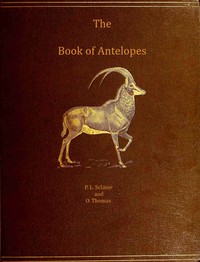
The book of antelopes, vol. 1 (of 4) by Philip Lutley Sclater and Oldfield Thomas
Let's be clear: this is not a novel. The Book of Antelopes, Vol. 1 is a scientific catalog, the first of four meant to document every species of antelope known to late-19th-century science. The 'plot' is the meticulous, page-by-page unveiling of these creatures, from the well-known Eland to the obscure. Each entry is a puzzle piece: a physical description, where it was found (often just a vague 'interior of Africa'), notes on its behavior from explorers, and beautiful, detailed lithograph plates.
Why You Should Read It
Don't read it for a story. Read it for the atmosphere. You get a front-row seat to how science was done in the age of empire and exploration. The authors' voices are formal, but their passion—and their frustrations—leak through. You see them debating if two slightly different horns are from separate species or just variants. There's a tangible sense of building knowledge brick by brick, often on shaky ground. It’s a humbling reminder of how much we didn't know, and how much effort it took to get here.
Final Verdict
This is a niche, but fascinating, read. It's perfect for history of science nerds, natural history illustrators looking for classic reference art, or anyone who enjoys primary sources that let you time-travel. It’s not a casual bedtime read, but for the right person, it’s a quiet, profound look into the mind of a bygone scientific era. Think of it as an artifact, as much as a book.
The copyright for this book has expired, making it public property. You are welcome to share this with anyone.
Dorothy Allen
2 years agoTo be perfectly clear, the character development leaves a lasting impact. A valuable addition to my collection.
Barbara Rodriguez
1 year agoAmazing book.
Betty Wilson
1 year agoTo be perfectly clear, the emotional weight of the story is balanced perfectly. This story will stay with me.
Donna Thomas
2 years agoBased on the summary, I decided to read it and the depth of research presented here is truly commendable. Definitely a 5-star read.





Ava Wright
1 year agoFrom the very first page, the arguments are well-supported by credible references. A valuable addition to my collection.