
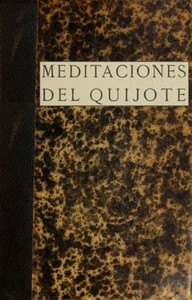
Meditaciones del Quijote by José Ortega y Gasset
Forget dry academic essays. José Ortega y Gasset's Meditations on Quixote (1914) is a vibrant, early-20th century love letter to a 17th-century novel. Ortega, then a young thinker, uses Cervantes's iconic tale not as a subject to dissect, but as a companion for a philosophical walk. He asks: What does this story of a deluded knight tell us about Spain, about being human, and about the very nature of things? He explores the tension between Don Quixote's idealized inner world and the harsh, mundane reality Sancho Panza represents.
Why You Should Read It
This book gives you a master key to understanding not just Don Quixote, but a whole way of thinking. Ortega's ideas—like his famous phrase "I am myself and my circumstances"—spring directly from his reading. He makes you see Quixote not as a fool, but as someone heroically insisting on a deeper, more meaningful layer of reality. The writing is dense but electric; you can feel his intellectual excitement on every page. It’s less about learning what the novel means and more about learning how to have a deep conversation with a great book.
Final Verdict
Perfect for curious readers who have always wanted to tackle Don Quixote but wanted a passionate guide, or for anyone who loves seeing how one genius (Ortega) talks to another (Cervantes). It's a must-read for philosophy fans interested in existential questions, and for anyone who believes old stories have urgent things to tell us about modern life. Just be ready to read slowly and think a lot. It’s a small book with a very big punch.
This is a copyright-free edition. Share knowledge freely with the world.





Thomas Hernandez
6 months agoHelped me clear up some confusion on the topic.