
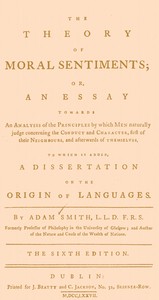
The Theory of Moral Sentiments by Adam Smith
The Story
There isn't a plot in the usual sense. Instead, Adam Smith takes us on a tour of human psychology. He starts with a simple observation: we naturally imagine ourselves in other people's shoes. We wince when we see someone get hurt. We feel second-hand embarrassment. Smith calls this 'sympathy'. He then builds a whole system from this starting point. He argues our desire for praise from others, and our own internal 'impartial spectator', guide us toward moral behavior. The book is his attempt to map the rules of this social and emotional landscape.
Why You Should Read It
This book completely changed my view of Adam Smith. It shows he wasn't just the 'father of capitalism' obsessed with self-interest. Here, he argues that our social nature and need for connection are just as fundamental. Reading it feels like getting the missing half of a famous story. His ideas about the 'impartial spectator'—that little voice in your head that judges your actions—are incredibly relatable. It's a fascinating, sometimes challenging, look at why we try to be good people, long before we think about profit.
Final Verdict
Perfect for curious readers who enjoy philosophy or psychology but want to avoid dry textbooks. It's also a must-read if you've ever read The Wealth of Nations and want the full picture of Smith's thinking. Be prepared to read slowly and think about your own reactions. It's not a beach read, but the insights about human nature feel as relevant today as they were in the 1700s. You'll start noticing his 'impartial spectator' in your own daily choices.
This book is widely considered to be in the public domain. Distribute this work to help spread literacy.
Michael Hernandez
11 months agoComprehensive and well-researched.
Charles Young
1 year agoHonestly, the emotional weight of the story is balanced perfectly. I learned so much from this.
Daniel Hill
6 months agoSimply put, the plot twists are genuinely surprising. Worth every second.
Mason Moore
10 months agoThis is one of those stories where the clarity of the writing makes this accessible. One of the best books I've read this year.





Michael Anderson
1 year agoThanks for the recommendation.